1911
Construction began – railway to run from Layerthorpe to Cliffe Common via Osbaldwick, Dunnington Wheldrake and Skipwith.
29 October – 1912
Freight services begin from Cliffe Common and Wheldrake.
19 July – 1913
Railway formally opened by Lady Deramore (Co Chairman’s wife) with special train for invited guests.
Public passenger services began – no services ran on the Sabbath at this time.
21 July – 1913
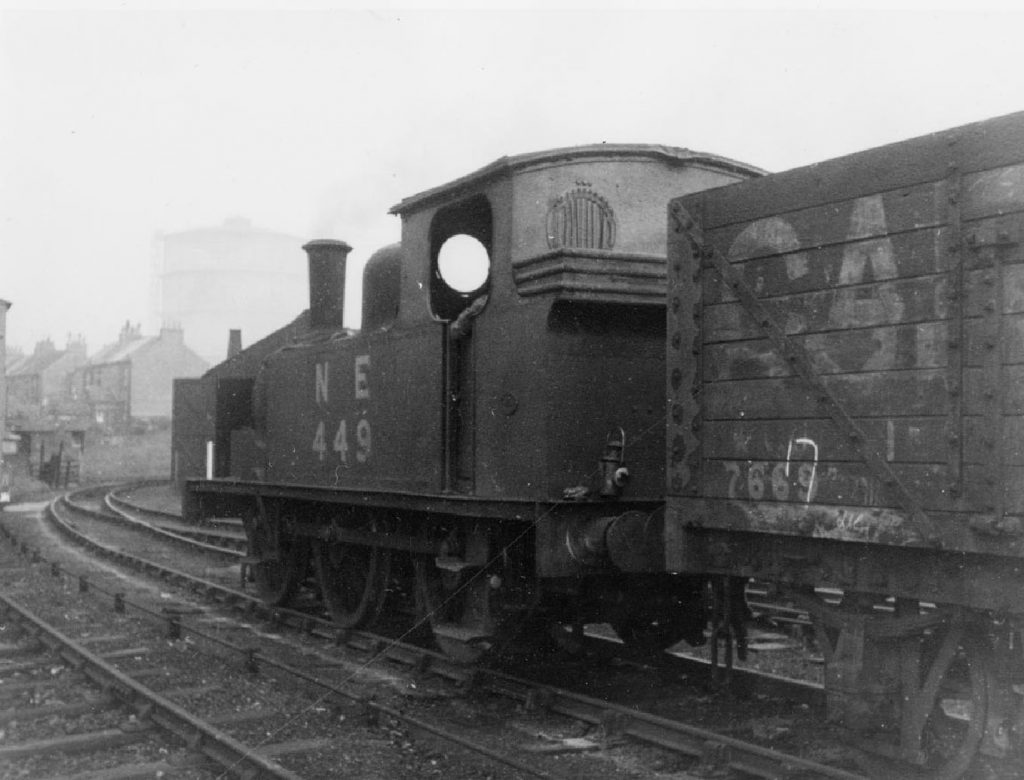
The Derwent Valley Light Railway hired locomotives from the North Eastern Railway. In order to reduce costs Co purchased a pair of Ford Railbuses each carrying 19 passengers.
31 August – 1926
Passenger services cease due to motor bus competition.
Occasional Excursion traffic continues, especially “Blackberry Specials” to Skipwith where blackberries were abundant. The line became known as “The Blackberry Line.”
World War 2
Without doubt WW2 had a profound affect on the Company, because of poor maintenance, the railway line could not be seen from the air, as such, “no weeding had to be carried out”!
Not only did the Co carry increases in agricultural materials, the railway carried materials for the new Airfields constructed in the area, Elvington and Riccall.
Various station sites were let for Ministry use, an Ordnance Depot near Layerthorpe, a Northern Command petrol depot at Murton and a former brickyard building at Elvington used to store tea.
After 1943 Wheldrake Station received special train loads of motor spirit in tankers which was burnt in special pipes situated along the runway at Melbourne Aerodrome in order to disperse fog. This was known as “Operation FIDO” (Fog Intensive Disposal Of)
Wheldrake Station also received train loads of bombs which were often stored at the roadside, prior to dispatch to the aerodromes.
A Mustard Gas Plant was constructed at Cottingwith, the mustard gas was received in special rail tankers from ICI at Runcorn and stored in underground tanks
This storage depot was one of 5 sites, happily the gas was not used, the gas was removed by rail and disposed of in the North Sea in 1954.
The site was finally cleared in the early 90’s although there has been the odd ammunition scare since!
1950
Although WW2 had taken its toll on the railway, the railway continued to serve the farming community and also diversify, in 1952 a Ministry of Works “Buffer Depot was constructed at Wheldrake which stored thousands of tons of sugar, corn beef, flour and biscuits, no doubt to protect the Nation from the “Cold War”
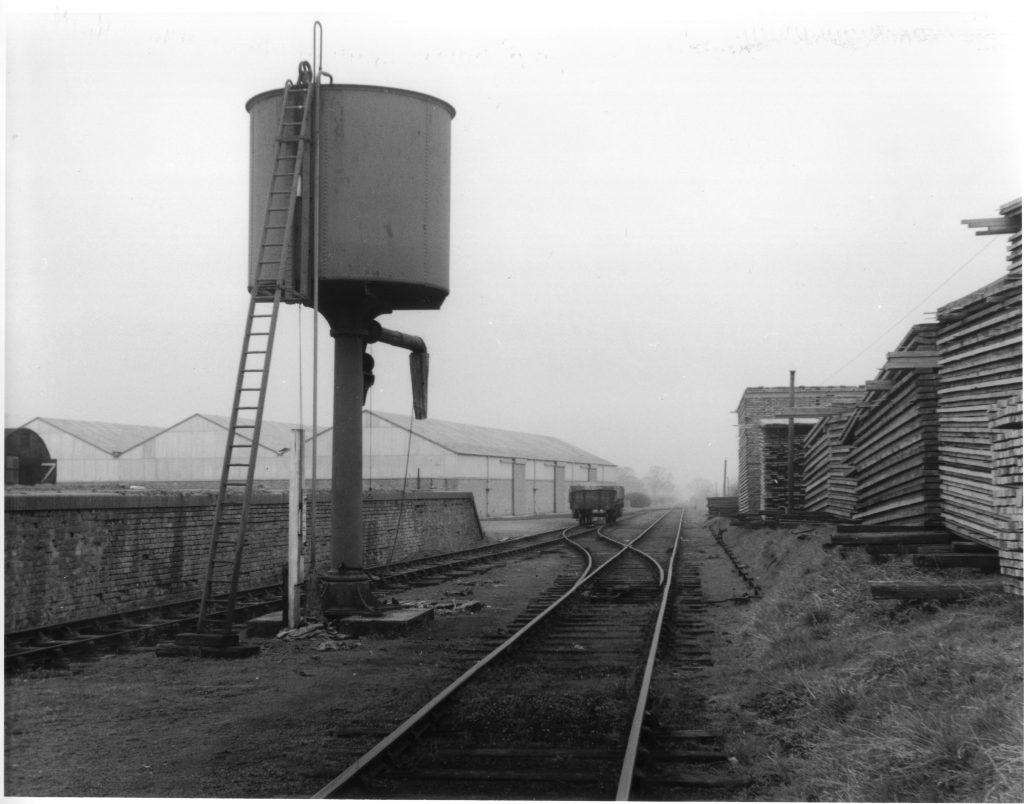
In the early 50’s. various station sites were used to store timber which had been imported from Hull Docks, these stocks appear to have been removed by 1957.
A mechanised Coal Distribution Depot was constructed at Layethorpe which served the York area.
In 1955 land was sold for a grain drying plant to be constructed at Dunnington, this plant lasted until the railway’s closure and in the latter years grain wagons were distributed to the Inverness Whisky Distilleries.
At Osbaldwick a ready mixed concrete plant was constructed.
Oil distribution at Layerthorpe continued to prosper and this traffic lasted until 1987.
Closures
When Dr Beeching announced the closure of the Selby to Market Weighton line in the mid 60’s the railway was cut back from Cliffe Common to Wheldrake in January 1965, the railway now became a branch line.
Sugar beet had always been an important source of traffic, this ceased in 1972.
By September 1972 the line had been cut back to Dunnington.
The Railway Company started to diversify into property letting and opened an Industrial Site at Dunnington, as such the Railway became known as the Derwent Valley Railway (dropping the word “Light” from its title.)
With the opening of the National Railway Museum in York in 1975, the DVR, began to run its own steam tourist railway in Summer months from May 1977 to August 1979, using the steam locomotive J72 0-6-0 tank named “Joem”
A final “Steam Special” was run in November 1979 and the locomotive was sold.
Because of declining Whisky sales in the early 1980’s, the DVR ran its last freight train from Dunnington on the 22nd of September 1981 with a final train for railway enthusiasts on the 27th September 1981.
The DVR continued its property interests at Layerthorpe and Dunnington.
As the Derwent Valley Railway was a plc Co, (ie listed on the London Stock Exchange) its assets were acquired by two London property entrepreneurs and reconstituted as “Derwent Valley Holdings” in 1985 and then renamed “Derwent London”
Today “Derwent London” is a very profitable property Co.
Preservation
Happily half a mile of the Derwent Valley Light Railway has been saved within the Yorkshire Museum of Farming at Murton (York) – passenger services run on Sunday’s and Bank Holiday Monday’s from Easter until the end of September
This is operated by the Derwent Valley Light Railway Society, which has a collection of locomotives and rolling stock.
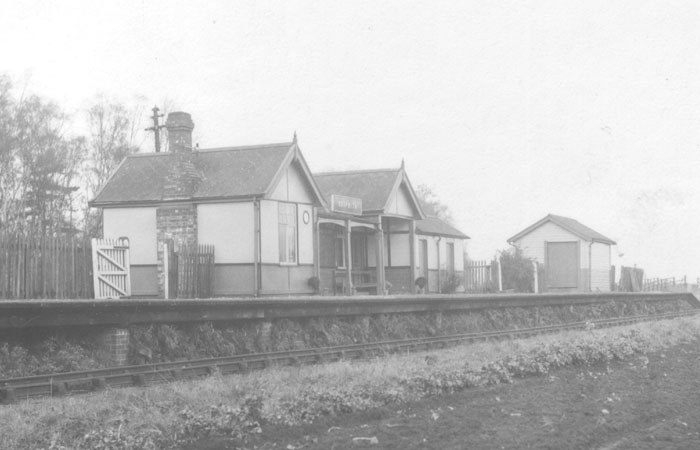
The Society’s “jewel in the crown” is the delightfully restored original DVLR Station building which was removed from Wheldrake and rebuilt at Murton.
The Society’s busiest time is when running the “Santa Specials at Christmas.
Various other remains of the DVLR can be seen today, the former line between Layerthorpe and Osbaldwick is now a footpath / cycleway, a number of the former level crossing keepers cottages survive.
Some Mustard Gas Plant buildings still survive at East Cottingwith.
Surprisingly whilst passenger services ceased in 1926, two other stations still exist, Thorganby and Skipwith. (the latter has been beautifully restored as a home and the grounds include 3 railway carriages which have been converted into holiday homes)
Without doubt the Derwent Valley Light Railway has had a remarkable history, remaining independent to its closure (ie not becoming part of British Railways) had it, I am sure it would have been closed long since.
In addition the Co had a very loyal workforce who were able to “multitask” long before the term became a “buzzword” and more importantly was able to pay its shareholders a dividend from 1941 to cessation!